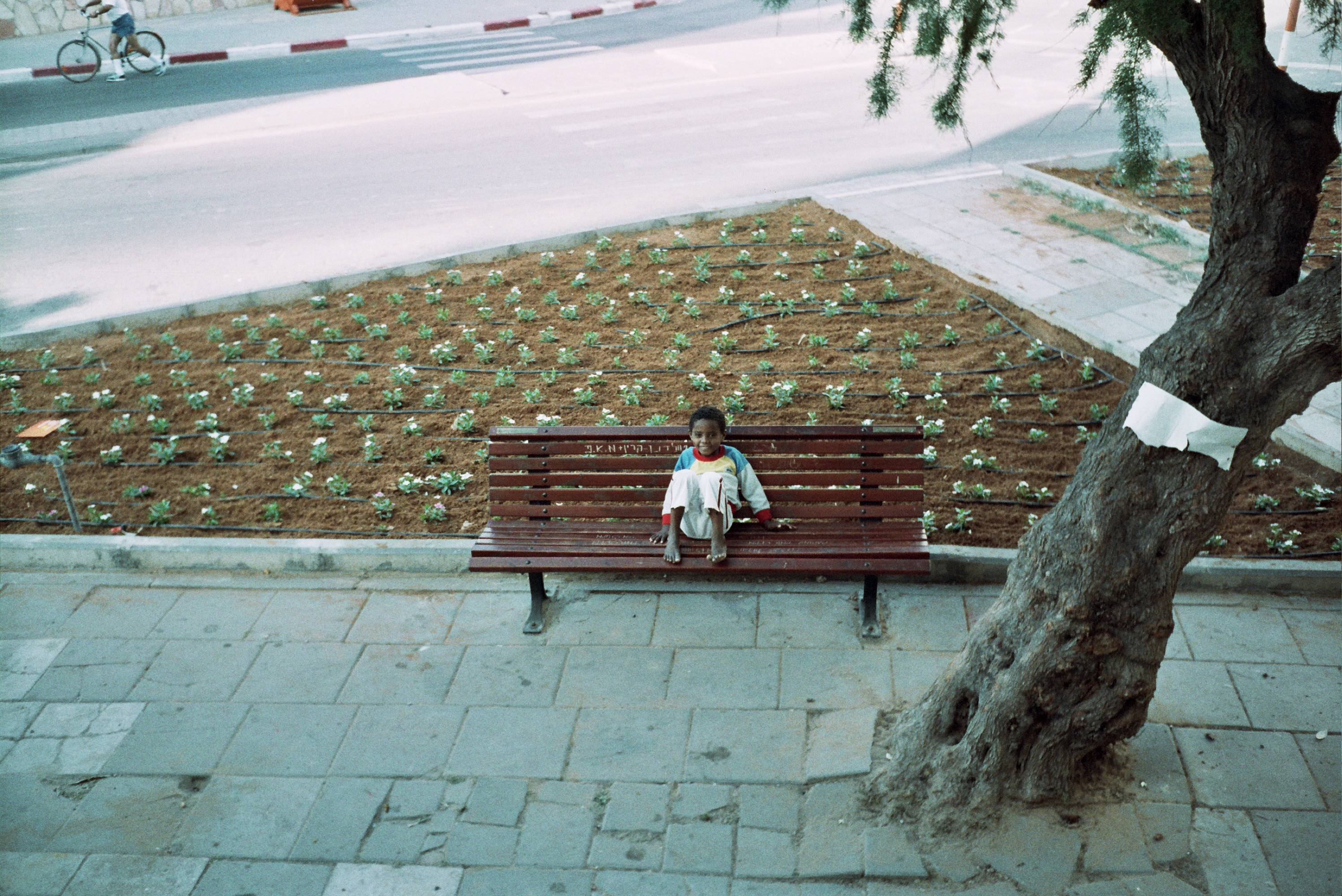
New arrivee in Operation Solomon.
When I was studying for my D.Phil, the thesis for which formed the basis of my book: Gondar’s Child: Songs, Honour & Identity among Ethiopian Jews in Israel, I was allocated two supervisors given my subject area – the anthropology of music: one for social anthropology, the second to whom my book is partly dedicated, for ethnomusicology. I thought my study incorporated both anthropology of music and ethnomusicology, or perhaps that the two fields were the same, or ought to be!
It was really when approaching ethnomusicology publishers that I realised that apart from one reader, the readers didn’t seem to know what to do with the anthropology in my work. (I find it noteworthy that the only reader who supported the publication of my book under the aegis of an ethnomusicology series – in this case, for Chicago University Press which held on to it for consideration by 3 or 4 readers over 3 years – was a woman. The rejecting readers for this press and the Ashgate Press, UK and were all men.)
One of the readers criticized my manuscript for not comprising a complete study of the whole of Beta Israel (Ethiopian Jewish) music in all its genres, and all its aspects – something which I specified was outside the scope of my work. It seemed this reader grossly underestimated the music of this ethnic group which had migrated from Ethiopia to Israel. Would he have criticized a study focused on story-telling in English folk songs, for example, for failing to include all other aspects of all other English musical genres and traditions? The Beta Israel were divided along the lines of language (Amharic, Tigrinya) which in itself was strongly reflected in the distinct music and dance of the two language groups; their music was divided into various genres according to social context; whether it was secular, liturgical; and so forth. [One of the first things one learns, or should learn, upon embarking on a university education is to delineate the scope of your work! That is not to say that the delineation should be fixed – certainly I don’t think that is advisable at the research phase. The late eminent social anthropologist, Dr PTW Baxter – Horn of Africa specialist – gave me the following advice in my early days of fieldwork when I was still searching for my “field”: “Tell yourself: ‘I will study what comes to me!'” I did, however, very much have to go out to find it in the first place!
One of the (main?) things that apparently distinguishes ethnomusicology from anthropology is the tradition of fieldwork in social and cultural anthropology. This was originally not clear to me as a defining factor, since many ethnomusicologists carry out fieldwork. But it seems that in anthropology, there is much tradition, history, debate, and theory relating to the concept and practice of fieldwork.
A musicologist invited me to submit the manuscript of my book to SOAS’s Ashgate Press to be considered for their ethnomusicology series. He was one of the readers, but after holding on to my manuscript for 18 months or so, it was turned down by both readers (the second – I had met at conferences) who declined to submit a report. The musicologist who invited its submission commented that I’d written “a nice memoir”! Apparently not appreciating the context and reasons for my account of my fieldwork, and my visibility in the text. In my introduction I wrote:
“….the objective of presenting an indigenous perspective is both facilitated and complicated by the fact of the participant-observer being of course very much a part of the field studied, with her presence impacting on that field, having as much relevance to the shape of events as any other person who became circumscribed within “the field”, which is in fact the anthropologist’s field….
“The presence in the field, and perception, of the participant-observer constitutes not just the vehicle through which their culture and worldview is conveyed, but also the limitation of this presentation. In fact, the nature of data available is largely determined by the relationship between the participant-observer, and the people with whom she is participating, and whom she is observing….. It therefore follows that in order to be true to the data, the anthropologist needs to show her visibility in the field.”
Despite characterising my ethnographic monograph as a “memoir”, and having turned it down for publication while declining to give a reason or submit a report, this musicologist must have found value in it; my manuscript was returned loose-leafed and removed from its spiral spine, while he, apparently having kept a photocopy, would draw on my then unpublished work (submitted by invitation for the purpose of consideration for publication) when giving talks about Ethiopian Jewish music when Black History month would come round (since it wasn’t by any means his field). Years later, once my book was published, he attended a talk I gave about it and purchased a copy.
Another thing that distinguishes anthropology from ethnomuscology as a discipline is the discursive element in anthopology. From its inception, it seems to have been continuously reflecting on its own nature. It started out viewing itself as, and trying (but always failing) to be, a science. As time went on, many different manifestations of the discipline appeared – in some of which it perhaps started to resemble an art.
I noted that a historian, responding to a journal article about a work of his, stated that he thought one should never miss an opportunity to explain one’s work. I’m not sure I agree with the “never” in his statement. I made a point of fully explaining my work in my introduction! It is, however, a habit of many academics to dip into books rather than necessarily read them from cover to cover, and I myself will often read the introduction last. With Gondar’s Child, however, it is important to read the introduction first in order to really understand how I have chosen to present my research.
One ethnomusicologist in particular who reviewed my book, Gondar’s Child characterised my discussion of my fieldwork methods and explanation of my methodology in my introduction as having a place in a thesis, rather than a published book (in fact, an ethnographic monograph, in the anthropological tradition). When one completes a doctoral thesis, one is generally very knowledgeable and the most specialised at that point in one’s particular field. It is certainly no put-down for something to pertain to a thesis, although I don’t actually understand why something which has a place in a doctoral thesis would have no place in a published academic book. Certainly a thesis needs to be revised for publication. I wrote to him personally in response, thus not missing the opportunity to explain my work to him. Since his review is publicly available, I feel that my response should be as well.
The text below is from my response to Professor Edwin Seroussi in my email to him dated 9th September 2013:
“Dear Professor Seroussi,
“I hope you are well, and I would like to thank you for reviewing my book.
“I am very pleased that you are satisfied with my treatment of the music of the people among whom I conducted fieldwork. I would just like to respond to a couple of other matters you mention:
“While there are some “armchair” anthropologists, social anthropology is very strongly characterised by fieldwork as a research method – the “founding father” of the fieldwork method being Malinowski. My introduction shows my research methods and methodology, and in doing so, discusses a number of issues relating to fieldwork which will be of interest to anthropologists, such as the concept of “the field”, the matter of being a single woman in the field, the matter of being in the field in a war zone; on finding your field, and how one is choosing to define one’s field. In addition, my introduction sets out my conceptual framework. Therefore, I am afraid I have to disagree with you about my introduction not having a place in my book, as opposed to my thesis.
“With regard to the pertinence of my book, since it was published so long after fieldwork: it is always the case with anthropological monographs based on fieldwork that even as soon as you sit down to write them, the material becomes historical rather than current….and of course, the more time that passes, the more historical they become! I have left it to a new generation of academics (eg. Ilana Webster-Kogen) to study the new generation of Beta Israel and their music. My book documents, and is significant as a reference point of, Beta Israel society and a particular genre of their music at that specific, very eventful, period of time.
“In fact, my book was with publishers for more than ten – maybe even eleven – years, before it finally came out. If it had been published immediately by the first publishers I submitted it to, it would have been around before the new generation grew up! I did do some further revision before my book went to press: in dealing with Aklilu Seyoum, and showing his place in the historical and social spectrum of Ethiopian music – drawing largely on the work of Falceto.
[….In this paragraph, I explained to Professor Seroussi why I chose not to include certain works in my bibliography, which he felt should have been included. In particular I hadn’t drawn on them for my book.]
“I hope this satisfactorily answers the issues you raised, and once again, I am grateful for your feedback on my book in your review.
With kind regards”
It is interesting in fact that ethnomusicologist Kay Kaufman Shelemay conducts fieldwork among the Beta Israel in Ethiopia in her research of their liturgical music. She starts as a single woman in the field, and then marries. Her fieldwork is interrupted by the Revolution, when her entire approach changes course of necessity. This is detailed in her book: “A Song of Longing: An Ethiopian Journey” which I reviewed in the British Journal of Ethnomusicology Vol. 5 (1996) https://www.jstor.org/stable/3060879. I devote extensive discussion to this subject in relation to her work: “Music, Ritual and Falasha History” in my D.Phil Thesis: “Songs, Honour and Identity, Bet Israel (Ethiopian Jews) in Israel” 1994, which is in the Bodleian Library in Oxford.
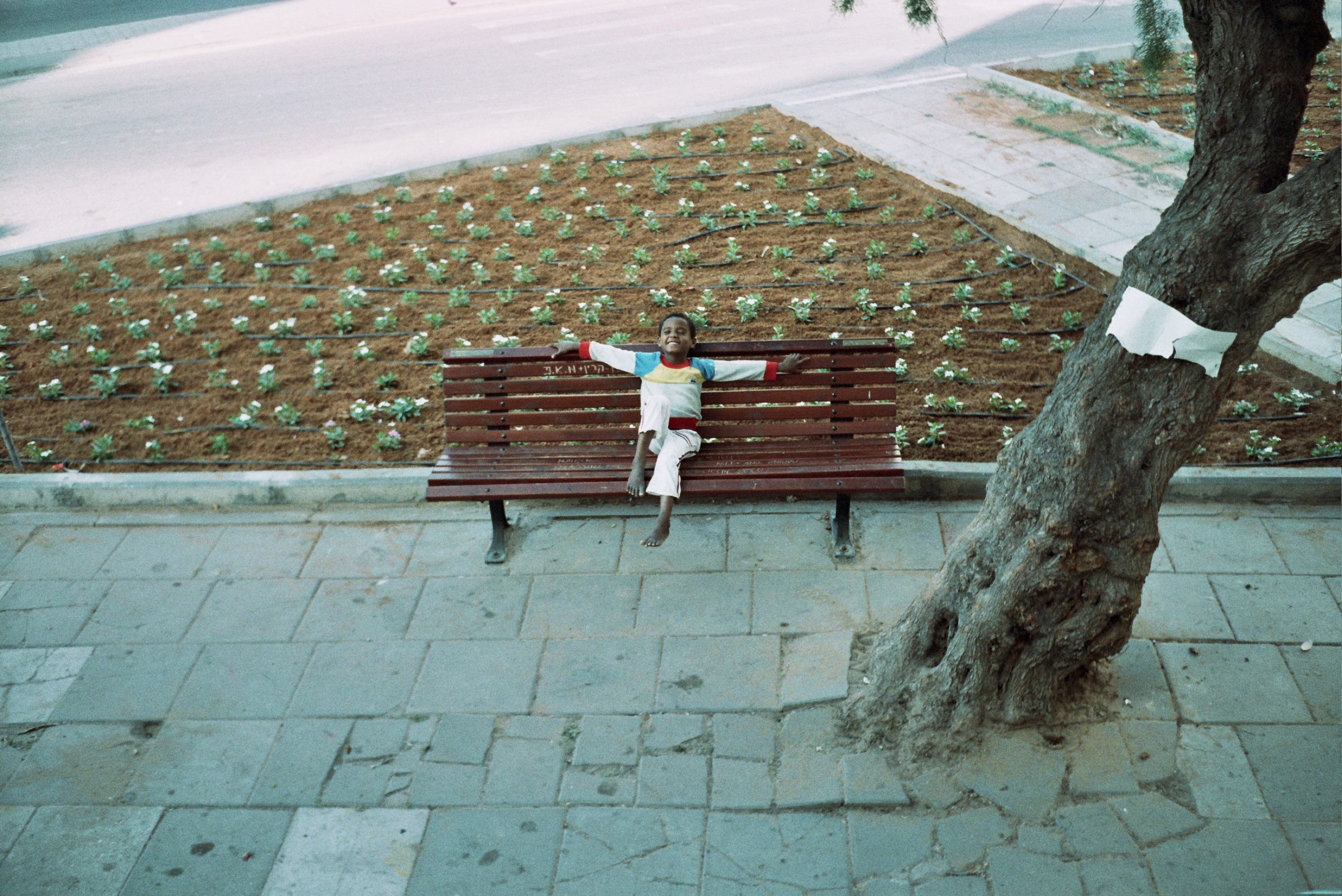
New arrivee in Operation Solomon.